
When your hearing feels dampened, it can interfere with your daily schedule and leave you feeling detached from your environment. Many people instinctively fear they’re experiencing permanent hearing loss when, in reality, the culprit may be something much more basic: cerumen accumulation.
Distinguishing between a wax impaction and actual hearing loss is crucial for determining if you need a simple removal or a formal diagnostic exam. There is no need to feel stressed if sounds seem muted. While only an audiologist can verify the cause, understanding these essential indicators of wax vs. auditory decline can provide immediate insight.
What Earwax Buildup Feels Like
Your canals generate wax as a natural protective process to maintain integrity and keep contaminants away from the tympanic membrane. Medical complications only develop when the wax fails to move out of the ear, resulting in a significant accumulation or impaction.
Standard markers of an obstruction include:
- Gradual or abrupt dampened hearing
- A sensation of canal fullness or a “plugged” sense
- Canal irritation or slight pain
- Ringing in the ear (ringing)
- Auditory clarity that improves temporarily after yawning or eating
Because blockages are physical, they frequently impact just a single ear at a point rather than each uniformly. The positive aspect is that clinical removal usually ends in an instant return of your natural hearing capacity.
Identifying the Markers of Permanent Hearing Loss
Lasting hearing shifts, often triggered by age or noise exposure, are gradual and remain even if the ear is perfectly clear.
Signs of actual auditory impairment may include:
- Struggling to follow conversations when ambient sound is present
- A persistent need for speakers to speak more distinctly or audibly
- Setting electronic device volumes to a level that others find uncomfortable
- Trouble hearing high-frequency tones like nature or children’s voices
- Auditory ability uniformly diminished on both sides
Unlike earwax buildup, hearing loss doesn’t usually cause a feeling of blockage or pressure.
At-a-Glance: Earwax vs. Hearing Loss
Several basic indicators can help you ascertain whether you are contending with a manageable obstruction or a more lasting change:
- Development: Cerumen muffling can be quick, but lasting loss requires years
- Resolution: Wax-related hearing changes are usually brief; auditory impairment is often irreversible
- Symptoms: Fullness and discomfort indicate wax; word intelligibility challenges suggest loss
- Symmetry: Blockages are often unbalanced, but permanent loss is frequently bilateral
Why Professional Intervention is Crucial
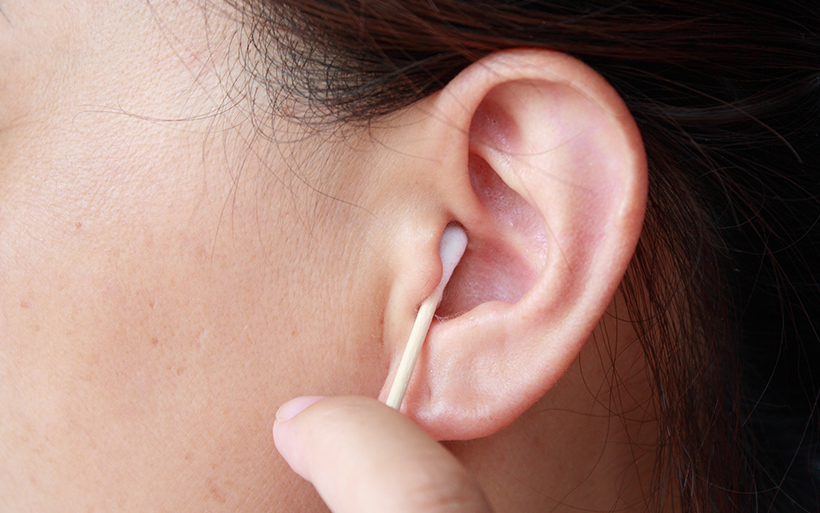
Many people make the error of trying to extract a perceived obstruction themselves using probes or household tools. In truth, physical poking often compresses the wax deeper against the tympanic membrane, making the situation more severe.
Health specialists warn that inserting anything smaller than your finger in your ear can lead to tympanic damage and severe clogging.
On the flip side, assuming a problem is merely wax when it is truly hearing loss can prevent you from getting the help you require to remain engaged.
The Importance of a Professional Ear Exam
A brief professional check-up is the primary way to verify if cerumen is actually the cause of your muffled auditory issues.
If wax is present, safe extraction often resolves signs immediately.
Should the auditory canal be unobstructed but hearing struggles continue, a hearing test can assess whether hearing loss is present and identify its type and severity.
The NIDCD advises prompt evaluation anytime changes in auditory function conflict with your daily routine.
Choosing the Right Path for Improved Sound Quality
Feeling like auditory signals are dull may not necessarily indicate a permanent change.
Frequently, the issue is merely a collection of cerumen that can be quickly cleared.
A clinical evaluation will give you the clarity you need to move forward without concern.
In the end, an audiology consultation is the only reliable way to distinguish between a temporary blockage and a permanent change.
Addressing the issue now stops the stress of the uncertainty and places you on the track to better hearing.
If your hearing seems off, don’t guess. A brief exam can make all the difference, so contact our team of clinicians today.
